.png)
Imagine a deployment script or monitoring tool suddenly stops working because a key file disappears from a shared directory. At first, it might seem like a routine cleanup or human error. But over the next few days, other issues start to surface. Important logs go missing. backups fail silently, and parts of the system begin behaving unpredictably.
What looked like a simple mistake turns out to be something more intentional: an effort to erase evidence, break incident recovery, or hide unauthorized access. Whether accidental or malicious, file deletions like this can cause security and operational failures long before anyone notices.
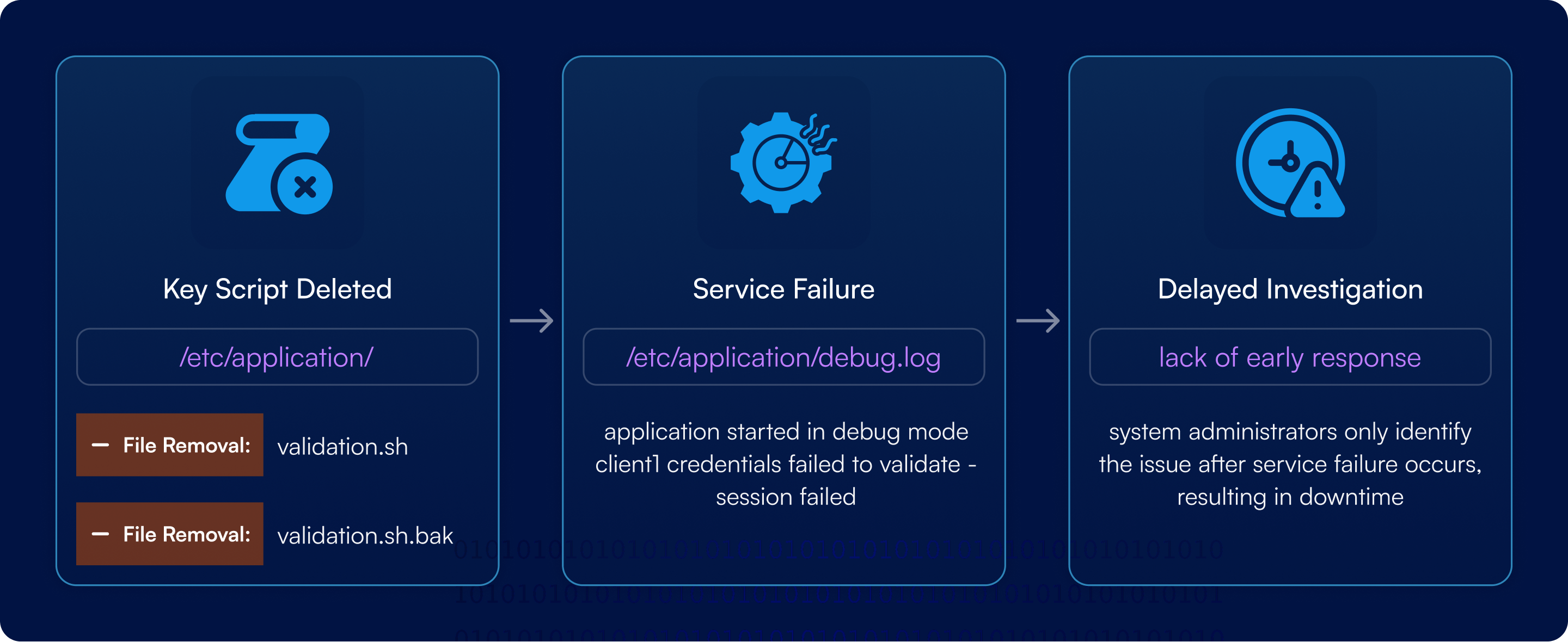
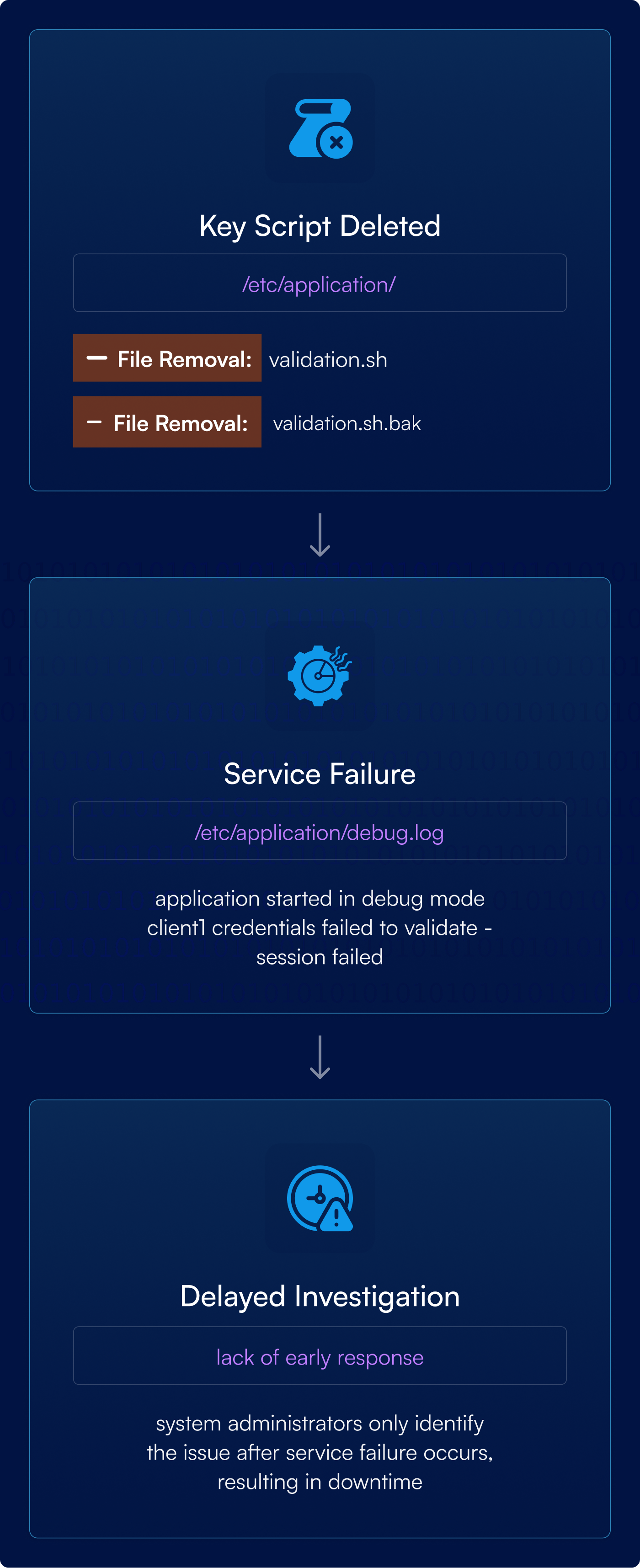

Files disappear regularly for legitimate reasons like automated cleanup tasks, routine log rotations, or when old features are removed. However, when critical or unexpected files vanish without any clear explanation, it often signals a serious underlying issue.
Many organizations lack formal records of file deletions. Without comprehensive backups or real-time audit logs, these deletions can go completely unnoticed. This gap in visibility creates opportunities for attackers to erase their tracks or for mistakes to cause prolonged damage.
For example, logs might be deleted to hide evidence of an attack, configuration files could be removed to disrupt recovery processes, important scripts may vanish from shared repositories, or valuable data files could be wiped as part of ransomware or insider attacks.
Because these deletions can silently undermine system integrity and security, monitoring for unexpected file removals is essential.
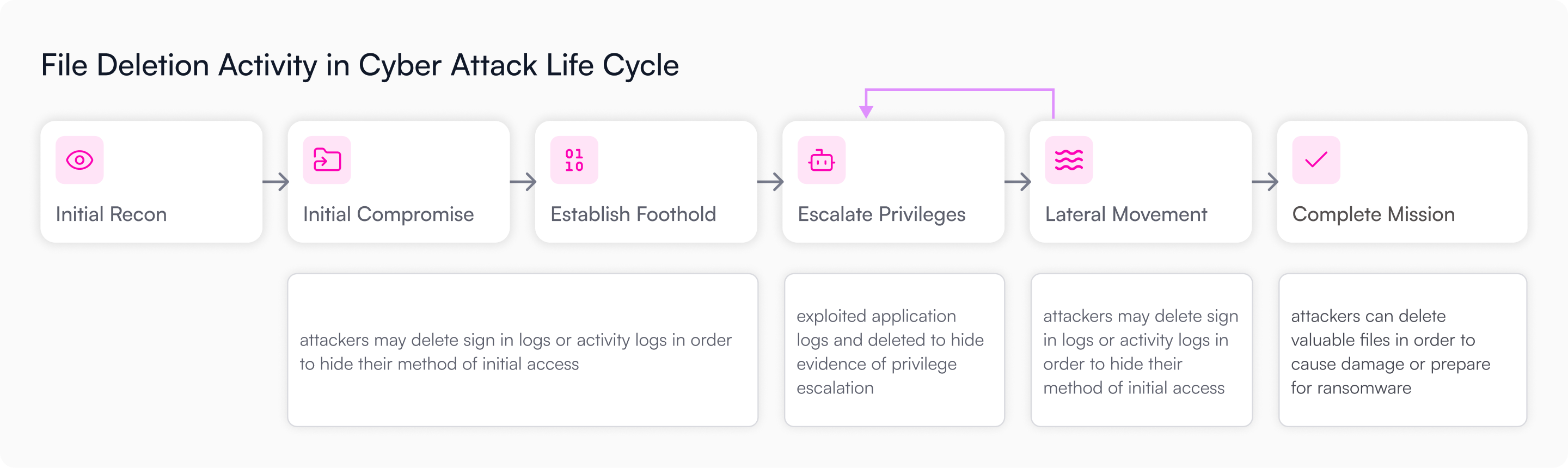
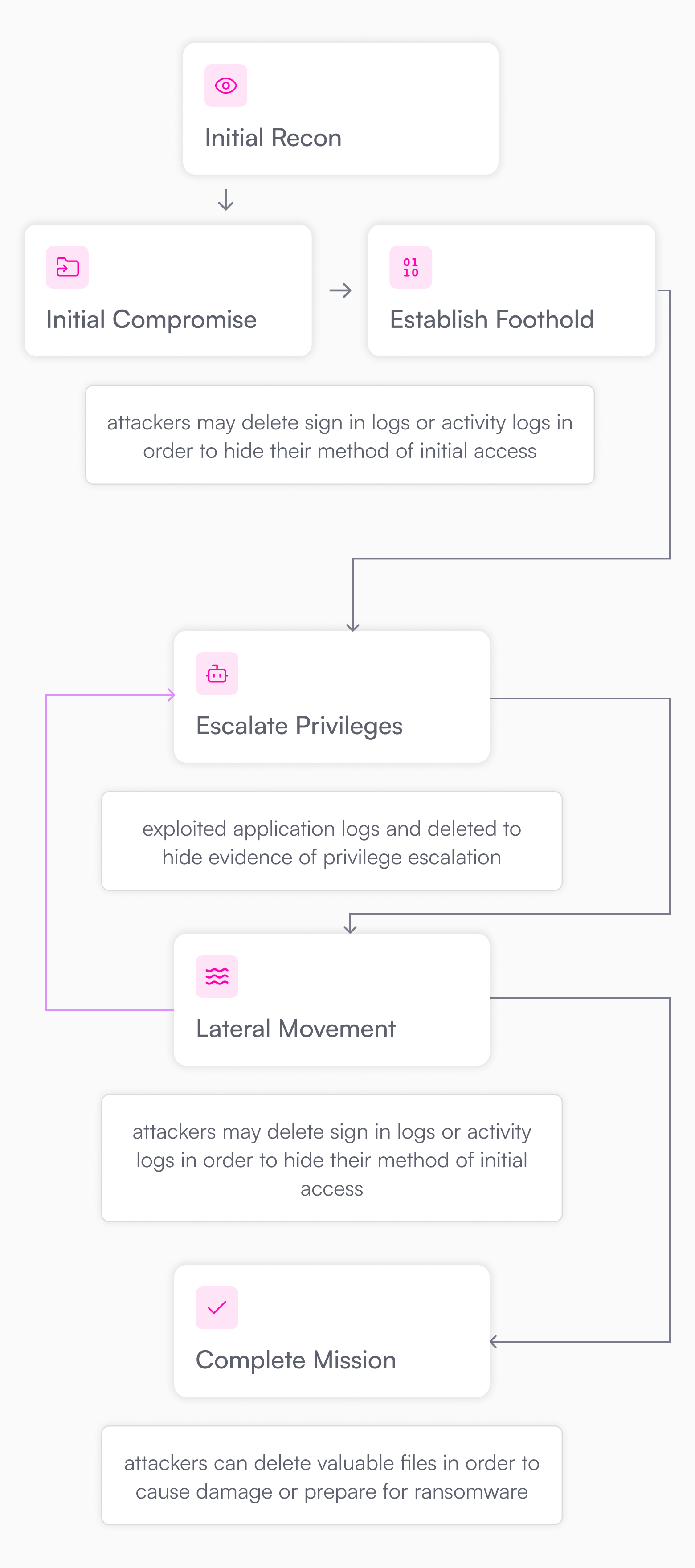
Imagine a threat actor gaining access to a staging server. Instead of immediately planting malware or triggering alarms, they quietly delete error logs and archived configuration files that would normally help investigators understand what happened.
When someone eventually notices something is wrong, there is no audit trail left to examine. The logs have been wiped. Backups are missing critical pieces. Without a forensic trail, it becomes much harder to trace the intrusion or understand its scope.
Attackers use file deletions strategically to remove evidence of their activity, disrupt recovery mechanisms, and create confusion during incident response efforts. This makes their presence harder to detect and prolongs the time before a breach is fully addressed.
It's important to remember that internal users can also delete files, either accidentally or with malicious intent. Without proper monitoring, such actions can easily blend into normal system operations, making detection difficult.
File deletions often go unnoticed because they usually do not leave behind any clear footprint. Most file systems do not track deletion events unless advanced auditing is enabled, which is rare outside of highly regulated environments.
Often, teams only discover something is missing when a service breaks or data goes unrecoverable. Even then, they may not know exactly which file was deleted, when it happened, or if the deletion was intentional.
This lack of visibility is especially dangerous in environments with shared storage systems, weak change control processes, limited backup coverage, or high personnel turnover including contractors. In such settings, files can disappear silently, creating significant security and operational risks.
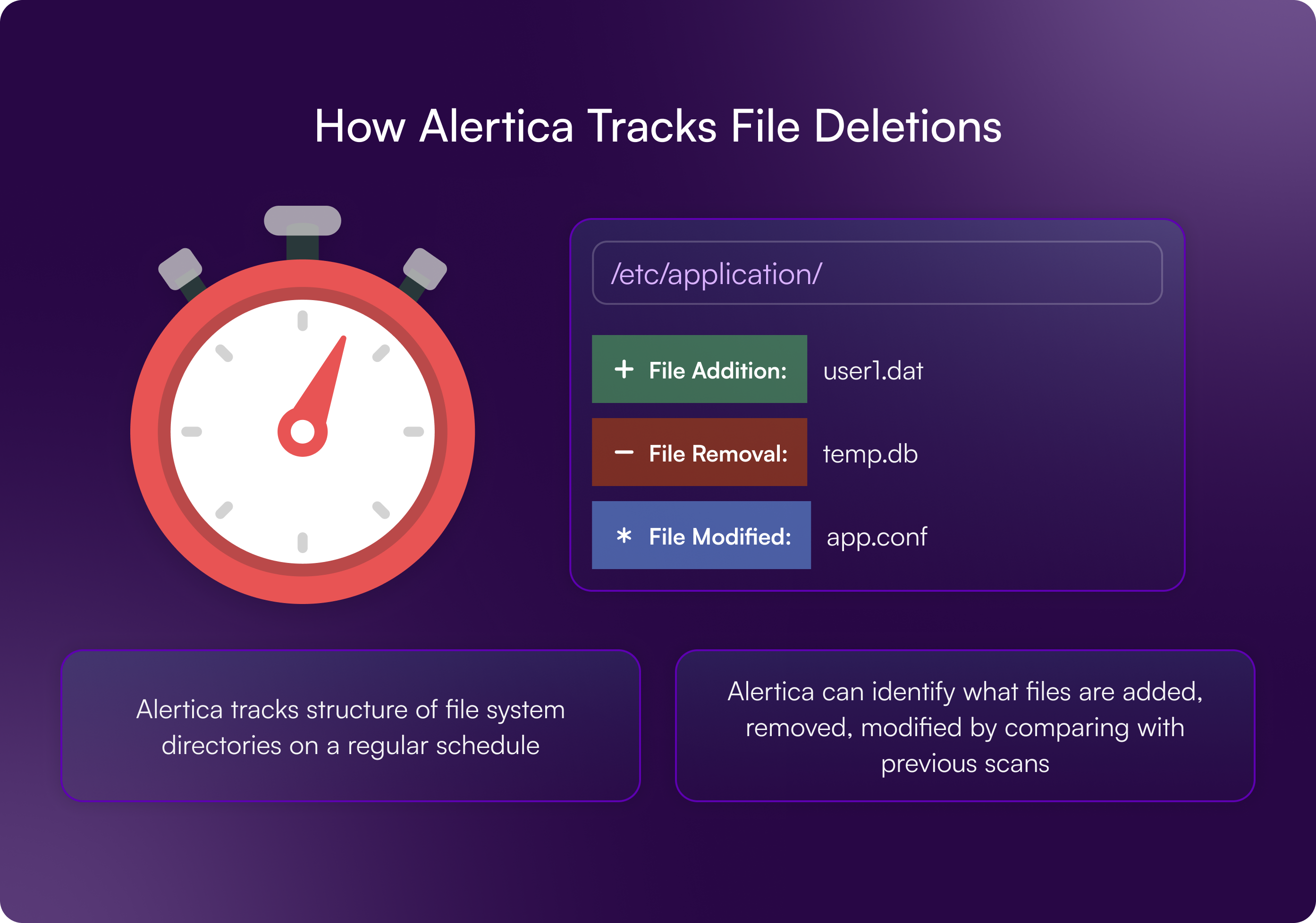
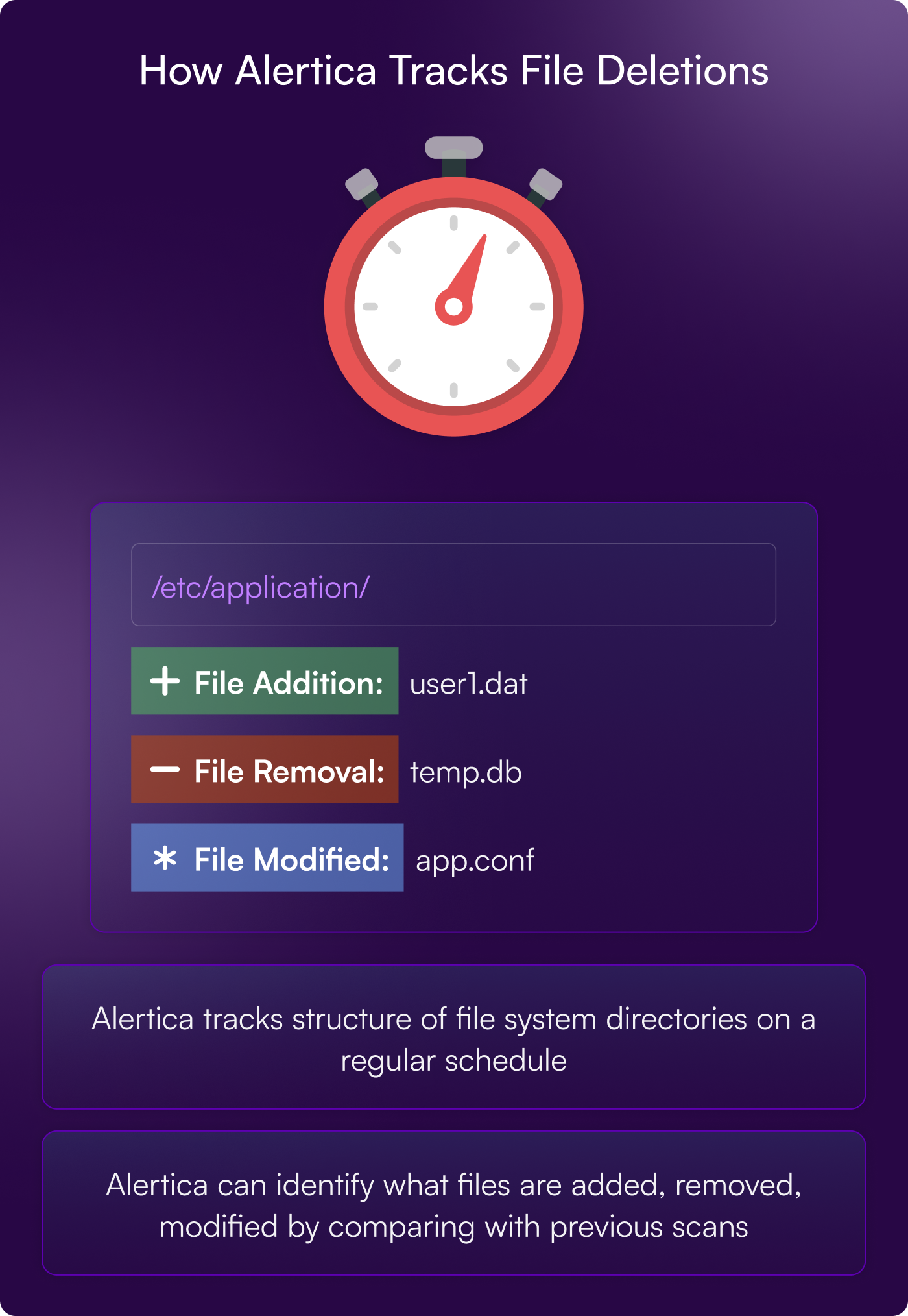
Alertica continuously monitors important directories and creates a detailed profile of the files that belong there. When a file suddenly disappears without being renamed, moved, or removed as part of a scheduled cleanup, Alertica raises an alert.
This approach enables teams to quickly detect high-risk deletions and identify patterns of suspicious file removals over time. It helps catch both accidental and malicious deletions early, before they cause lasting damage.
Alertica achieves this without the need to install local agents or access entire disks. Instead, it uses lightweight metadata checks over standard protocols to verify which files are present and when they were last observed.
By providing timely alerts on unexpected deletions, Alertica gives incident responders a crucial head start, reducing the window attackers have to operate undetected.
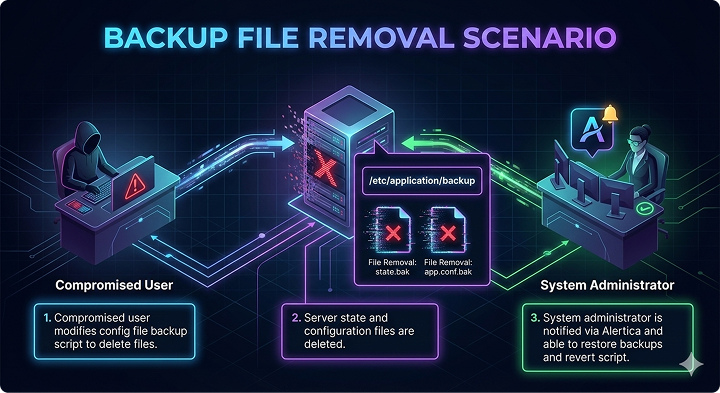
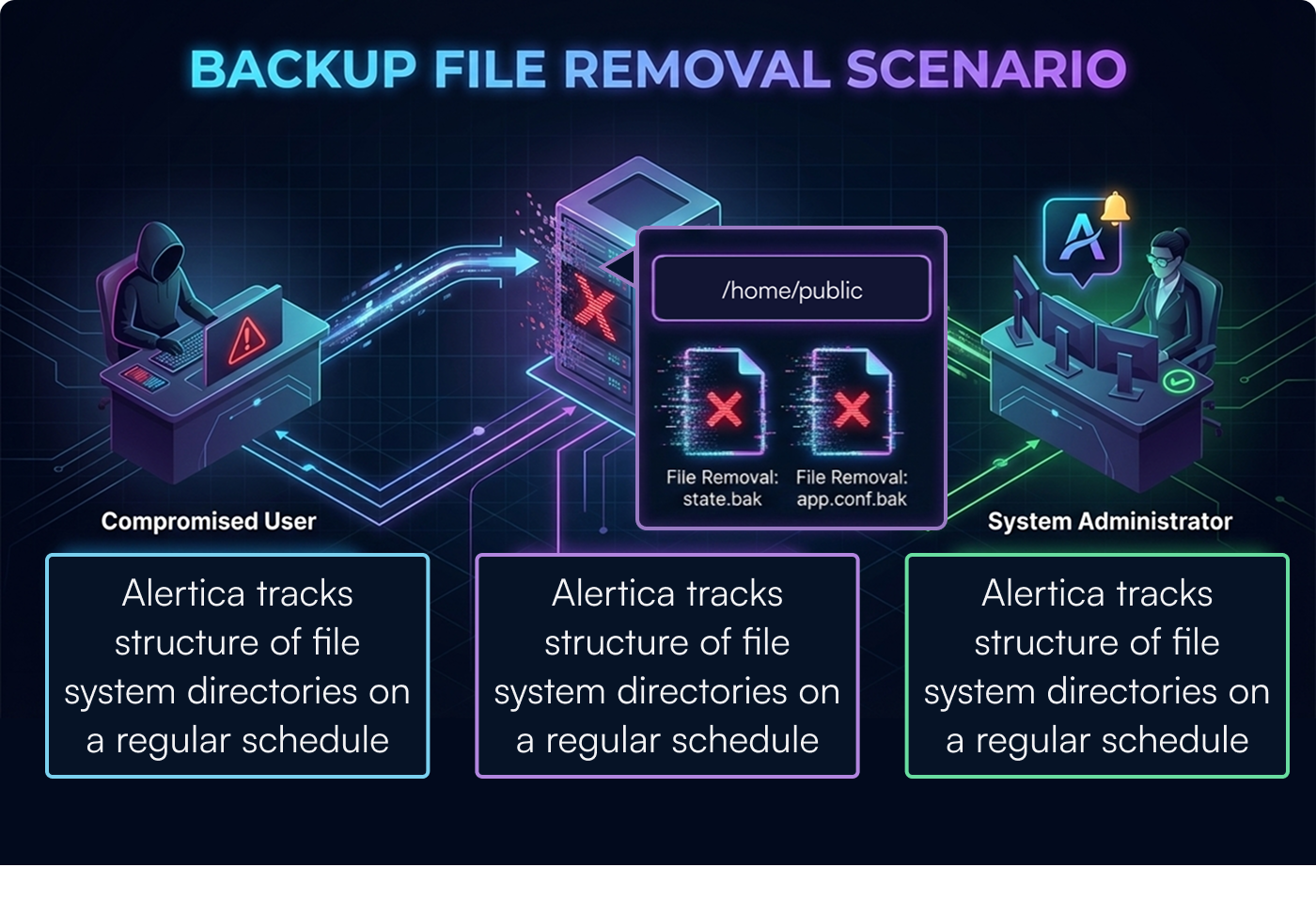
Imagine a company that relies on nightly jobs to back up critical configuration files and server state. Normally, these backups accumulate daily in a secure directory and provide the foundation for rollback during outages.
One night, a user with elevated access silently modifies the backup script. Instead of saving files, the script is changed to delete them after each run. The job appears to complete successfully, so no one notices the change.
Weeks later, during an unrelated system outage, engineers attempt to restore the latest backup, only to find that the directory is empty. The most recent valid backup is several weeks old, and the deletion went entirely undetected.
Alertica identifies that key files in the backup directory have stopped appearing. It notices the change in behavior, with no new files written, and the directory consistently returning to an empty state. Based on historical patterns, this deviation triggers an alert.
Thanks to this early warning, the security team investigates the altered script, recovers what data remains from offsite snapshots, and revokes unnecessary privileges from the compromised user - preventing further loss and helping to restore trust in the backup process.
Many environments aren't built to support endpoint-based monitoring, especially when it comes to catching file deletions. Enabling full audit logging or deploying file integrity agents across every system may sound ideal, but in practice, it's complex, invasive, and often impractical.
Alertica takes a different approach.
By using lightweight, external scanning over FTP and SFTP, Alertica passively observes file structures and metadata - no agents, no system modifications, and no privileged software installs. It builds a fingerprint of known directories and expected files, and checks regularly to see what's missing.
This is especially valuable for detecting silent mass deletions. For example, if a backup script fails and wipes a critical folder, or if a disgruntled user purges log archives, traditional tools may miss the event entirely unless advanced auditing was already in place. Alertica spots these anomalies simply by noticing what's no longer there.
In these environments, the cost of being blind to file deletions is high, but the barrier to visibility is usually even higher. Agentless monitoring closes that gap.
Missing files can lead to silent failures, lost data, or even hidden security compromises. Many tools are not designed to alert teams when important files simply disappear. Alertica fills this critical gap by making file deletions visible and actionable.
By bringing these hidden changes to light, Alertica helps teams detect issues faster, respond more effectively, and maintain system integrity across diverse environments.
If you want to safeguard your systems against silent sabotage or accidental mistakes, we invite you to try Alertica or schedule a consultation with our team.
Get a personalized tour of Alertica from one of our team members and learn how it can fit your infrastructure.
Request a Demo
Alertica is a cloud-based server monitoring platform that provides real-time file activity alerts to help teams detect suspicious behavior early—without the need for installation or complex setup.