.png)
Most monitoring tools focus on the obvious, like uptime, CPU usage, or memory pressure. But the file system is often overlooked and treated as static and predictable. When something changes there, it is usually someone else's problem.
The reality is that file behavior reveals a lot. A missing PDF, a log file that suddenly balloons, or a user uploading a 5GB video into a folder meant for thumbnails. These events might seem minor on their own but, taken together, they often show early signs of broken automation, misconfigurations, or even malicious activity.
They are subtle and easy to miss. Often, they go unnoticed until something breaks. Alertica changes that by quietly monitoring these subtle file anomalies across IT, DevOps, and Security teams without installing any software.
Files often get overlooked but they are where most work happens. Scripts write to them, users upload them, services log to them, and backups depend on them. When something goes wrong, files are usually the first place where problems show up.
File changes do not raise alarms on their own. A missing file rarely causes a crash, and a 2GB upload won't trigger a warning if there is still disk space left. That silence is a problem because small issues get time to grow.
Most teams assume reports are generated on time, logs rotate properly, and users know which folders to use. When something slips out of place, it often goes unnoticed until it becomes serious.
Alertica helps catch these early signals before they turn into problems.
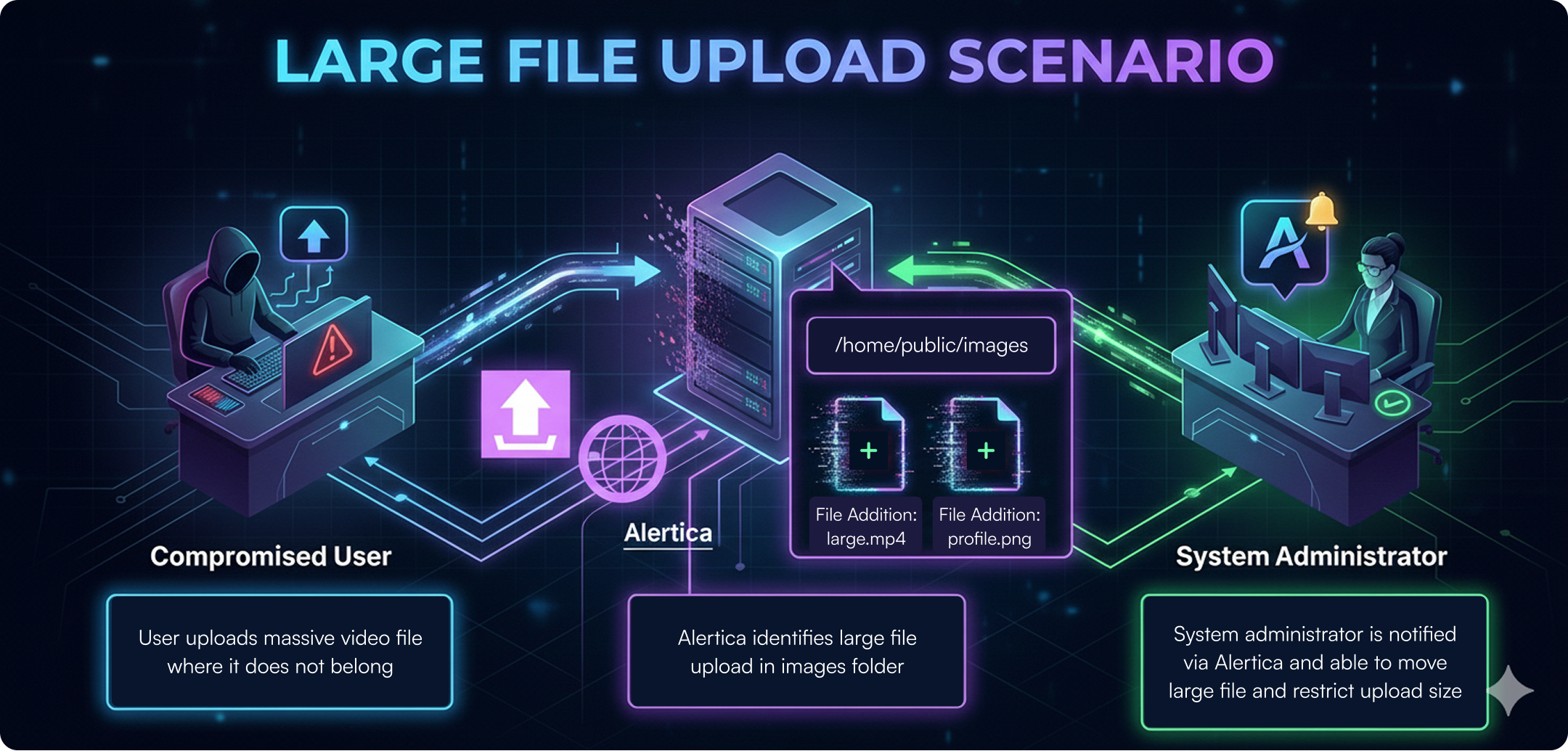
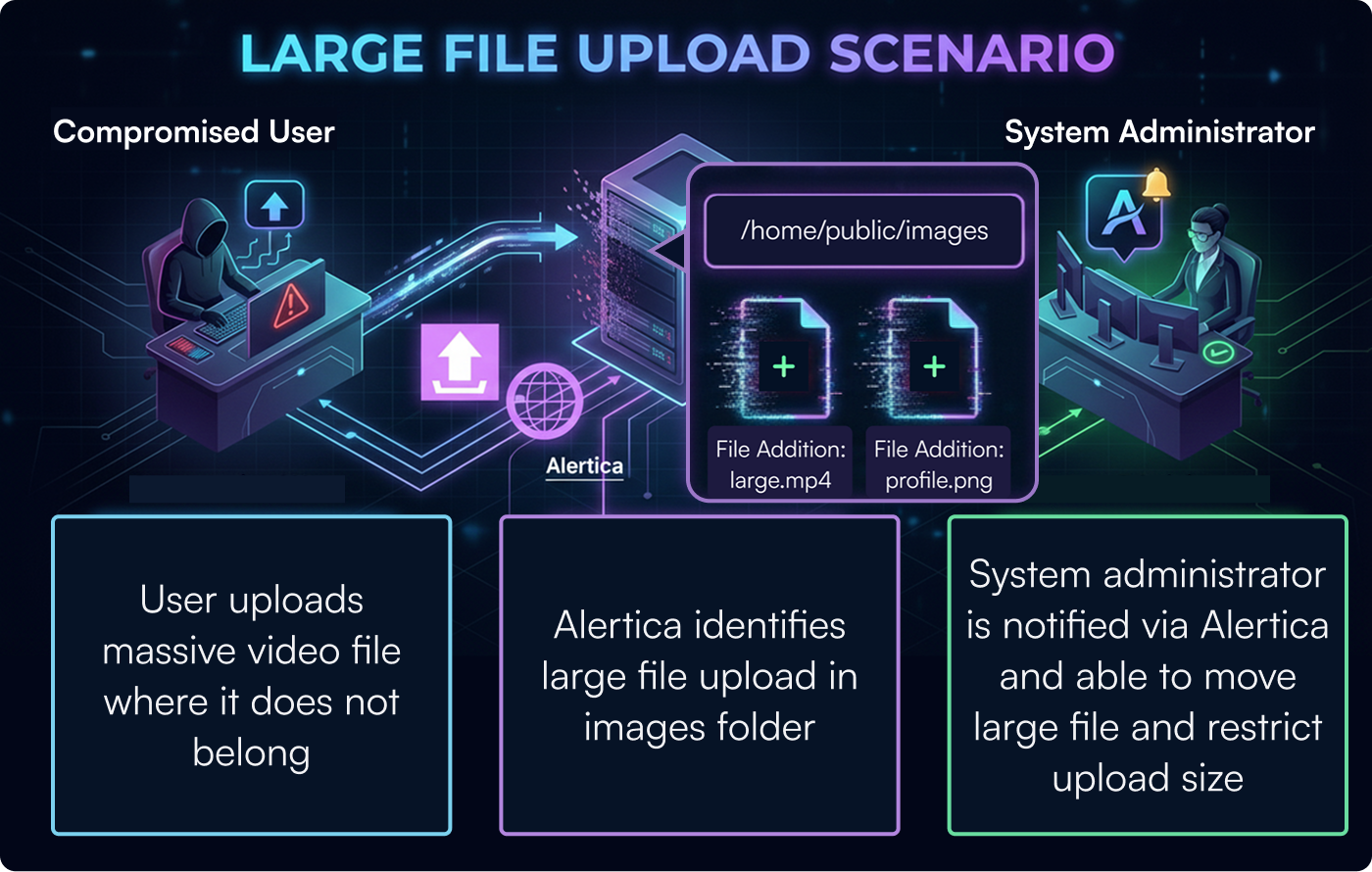
Imagine a shared folder labeled "Images Only" where small graphics are stored for marketing. Files are usually under 10MB and backed up every night.
One day, a user uploads a massive 5GB file, perhaps a video or a ZIP of raw assets. It stays in the folder for days. Backup jobs start timing out, and sync tasks slow down. But no one knows why.
Eventually, the IT team finds and deletes the file. The problem is the issue went unnoticed for a long time and caused multiple failures downstream.
If Alertica had been monitoring, it would have detected the oversized file immediately. A simple size limit rule could have triggered an SMS alert to IT as soon as the file appeared. The problem would have been fixed before backups failed.

In another part of the company, developers rely on an automated job to generate weekly compliance reports every Friday evening. No one checks these manually because they are assumed to be working.
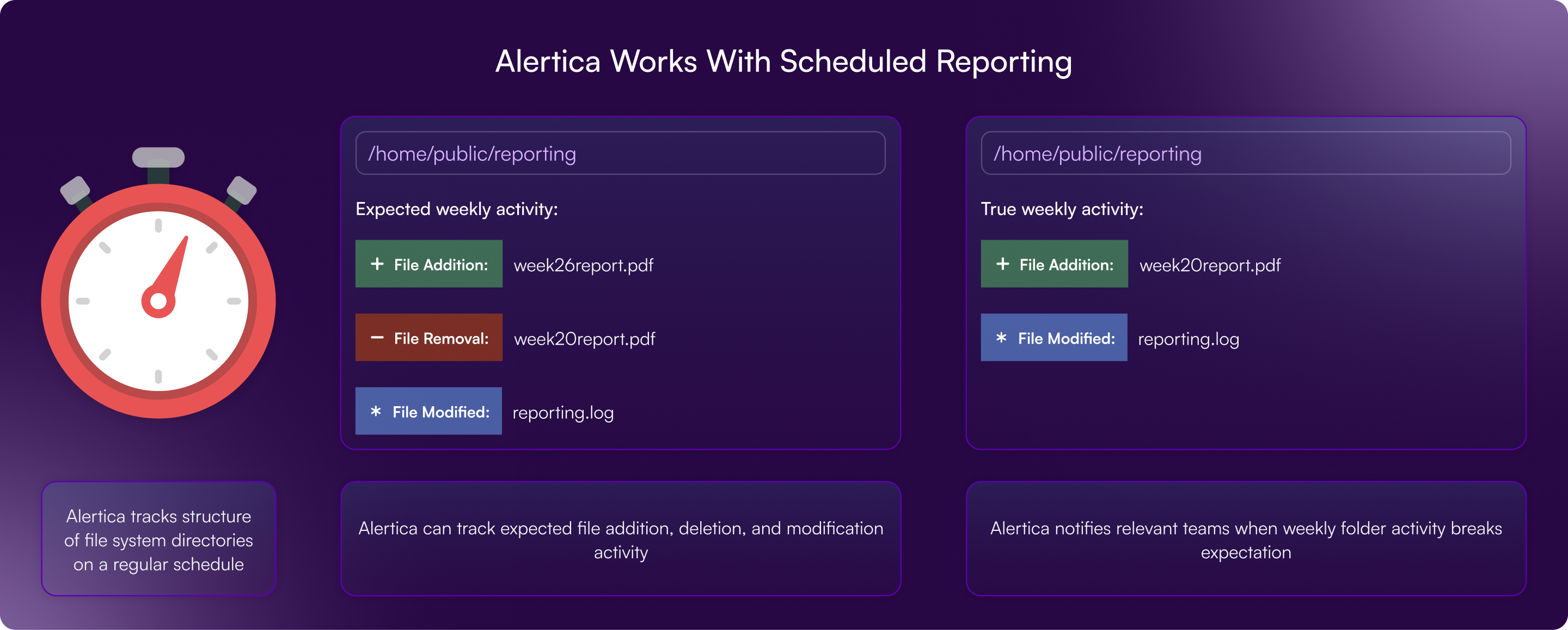
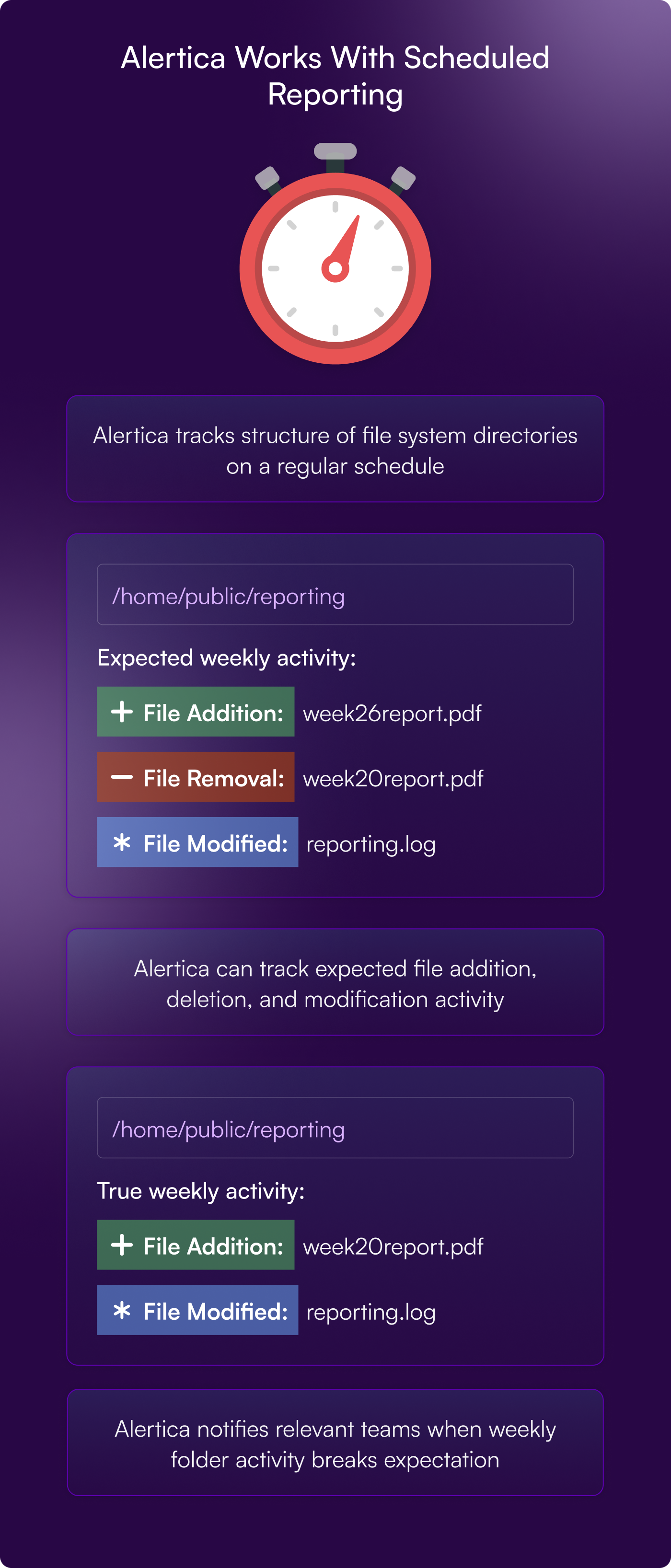
One week, the report never shows up. A dependency broke and the script failed silently. No error was reported, and the team only notices the missing report the following week, well past the deadline.
Alertica learns normal behavior and notices that weekly reports have been consistently generated. When a report doesn't appear on schedule, it sends an immediate alert to the dev team. If the issue remains unresolved after 48 hours, it escalates the alert to security.
Failures like this do not always look like outages but have serious consequences, especially when compliance is involved. Early detection is critical.
Sometimes files do not disappear - they grow unexpectedly.
Consider a web application that normally generates about 10MB of logs per day. One weekend, a log file grows by over 500MB. There are no alerts, and the log keeps expanding silently, consuming disk space and potentially overwriting important entries due to rotation.
What caused this? It could be a crash loop, debug mode left on in production, or a brute-force attack.
Regardless of the cause, the sudden change in log size is unusual and important.
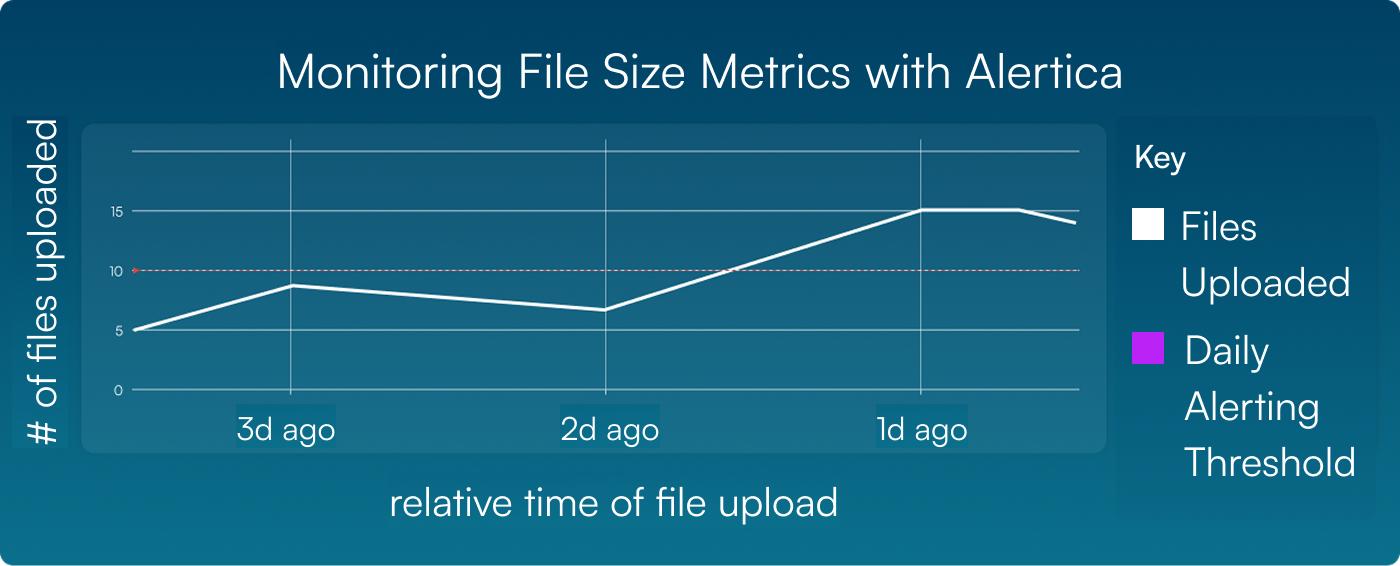
Alertica detects this by comparing file size trends over time. It does not inspect log contents, only metadata. That insight alone is often enough to prompt SecOps to investigate early and prevent bigger issues.
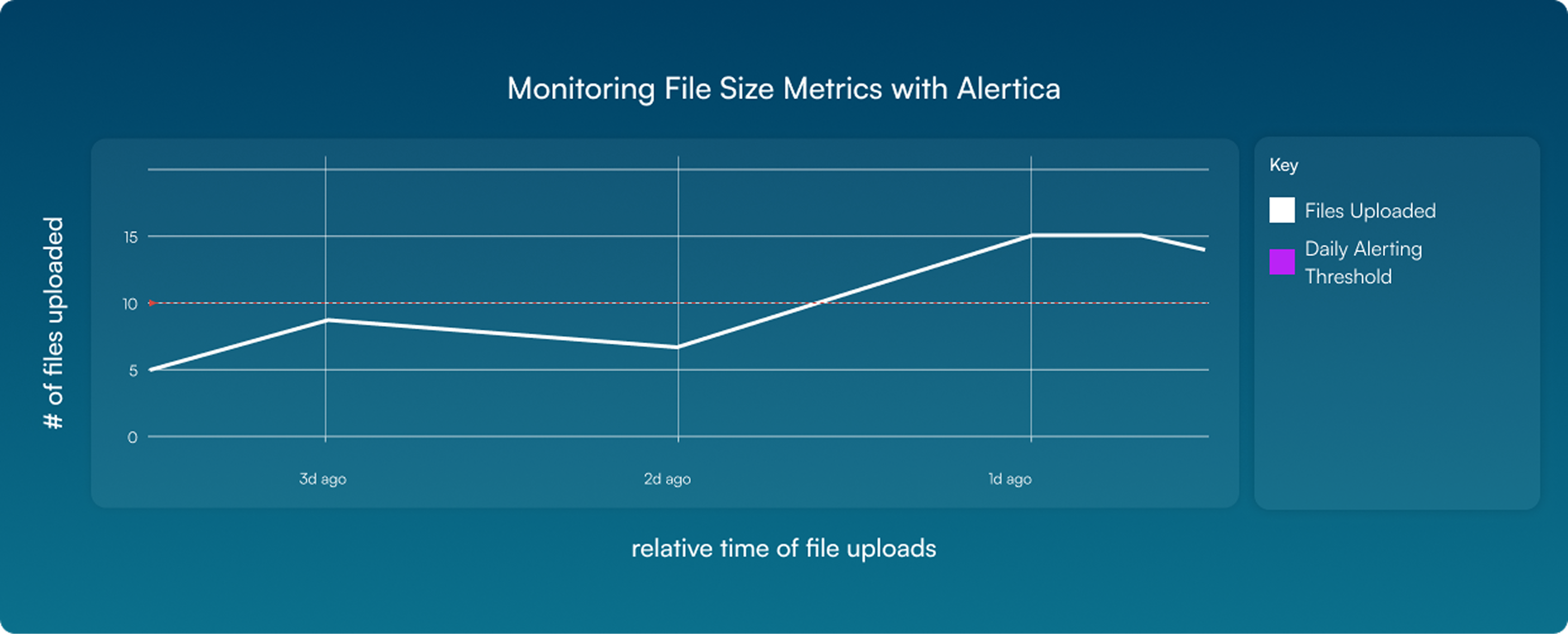
Here is another silent problem. A script on a production server malfunctions and begins creating hundreds of tiny error files every few minutes. Normally, the directory receives a single summary log per day. Now, it is flooded with thousands of small files.
There is no crash, and the application continues running. But disk space fills up slowly, and no one notices until a related failure occurs.
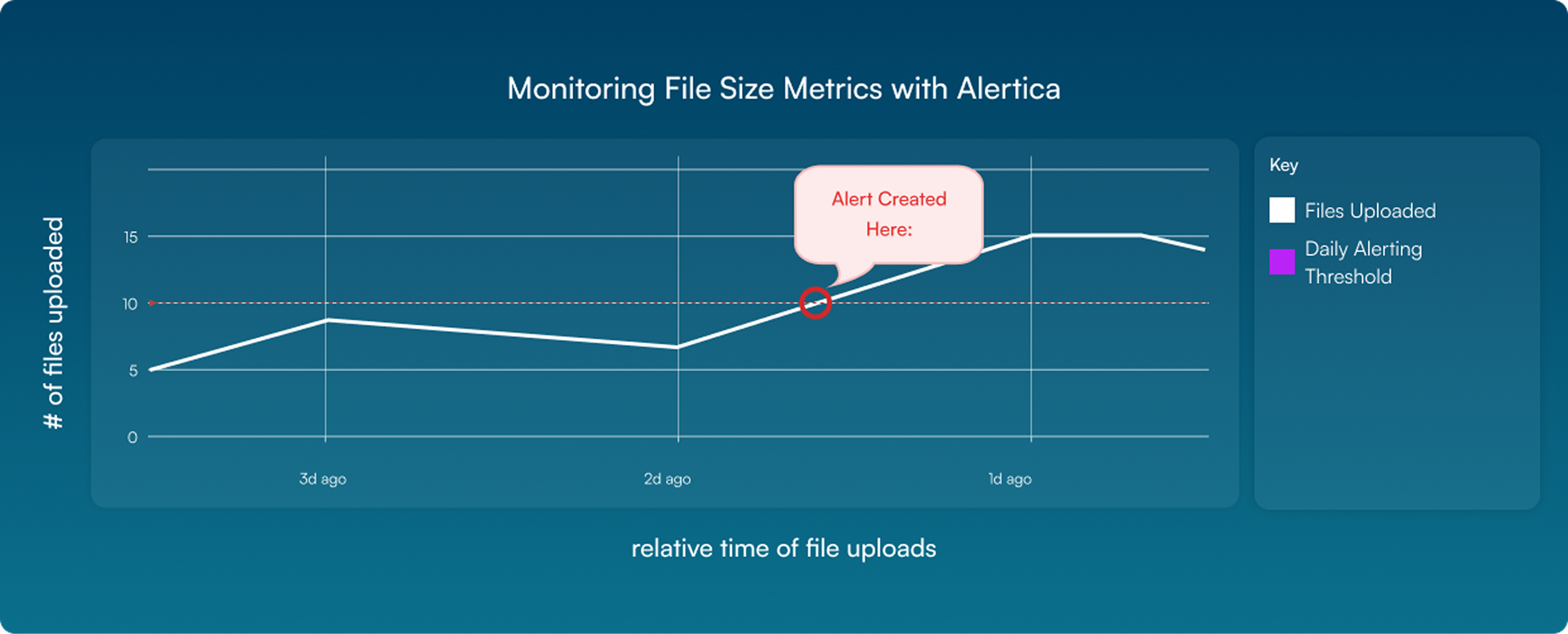
Alertica monitors the number of files in directories over time. It detects when file counts increase sharply by comparing current behavior to historical norms. This sudden spike triggers an alert so teams can investigate before disk space runs out.
Problems like this often remain unnoticed because no one monitors file volume trends. Alertica fills that gap.
Detecting issues like oversized uploads, missing reports, or rapidly growing log files requires constant vigilance. But installing monitoring agents everywhere can be costly, complex, and sometimes impossible - especially across diverse environments with legacy systems or strict change controls.
Alertica solves this problem by using agentless file monitoring over FTP and SFTP. It connects remotely to servers and checks file metadata like size, modification time, and directory contents - without ever touching the file content or installing anything on the host.
By building a baseline of normal file behavior, Alertica quickly spots anomalies. For example, if a user uploads a file larger than 2GB into your "Images Only" folder, an immediate SMS alert goes to your IT team. If the weekly report PDF is missing, your developers get notified, with automatic escalation to security if the problem persists. When log files spike in size by hundreds of megabytes, SecOps teams receive timely email alerts to investigate before disk space runs out.
This approach brings fast, scalable visibility to file system events that often fly under the radar but carry big consequences. Because it relies solely on lightweight metadata checks, Alertica avoids the resource drain and security concerns that come with full content scans or agents.
If your team needs to catch these subtle file issues before they disrupt operations, now is the time to consider agentless monitoring. Alertica lets you add that essential layer of file system awareness quickly and without friction.
See how Alertica can help your team detect file size violations, missing reports, and log overflows before they become critical problems. Contact us today to schedule a demo or start your free trial.
Get a personalized tour of Alertica from one of our team members and learn how it can fit your infrastructure.
Request a Demo
Alertica is a cloud-based server monitoring platform that provides real-time file activity alerts to help teams detect suspicious behavior early—without the need for installation or complex setup.