
Imagine a developer makes a quick tweak to a sensitive application’s settings in order to troubleshoot. As a result, debug logging remained enabled in production and caused customer data to leak into logs for weeks before anyone noticed.
This kind of small, well-intentioned misstep by a developer can cause a cascade of privacy and security issues for both the customer and service provider. Seemingly harmless configuration changes can expose systems to major risks, and most teams aren’t
watching these changes closely enough
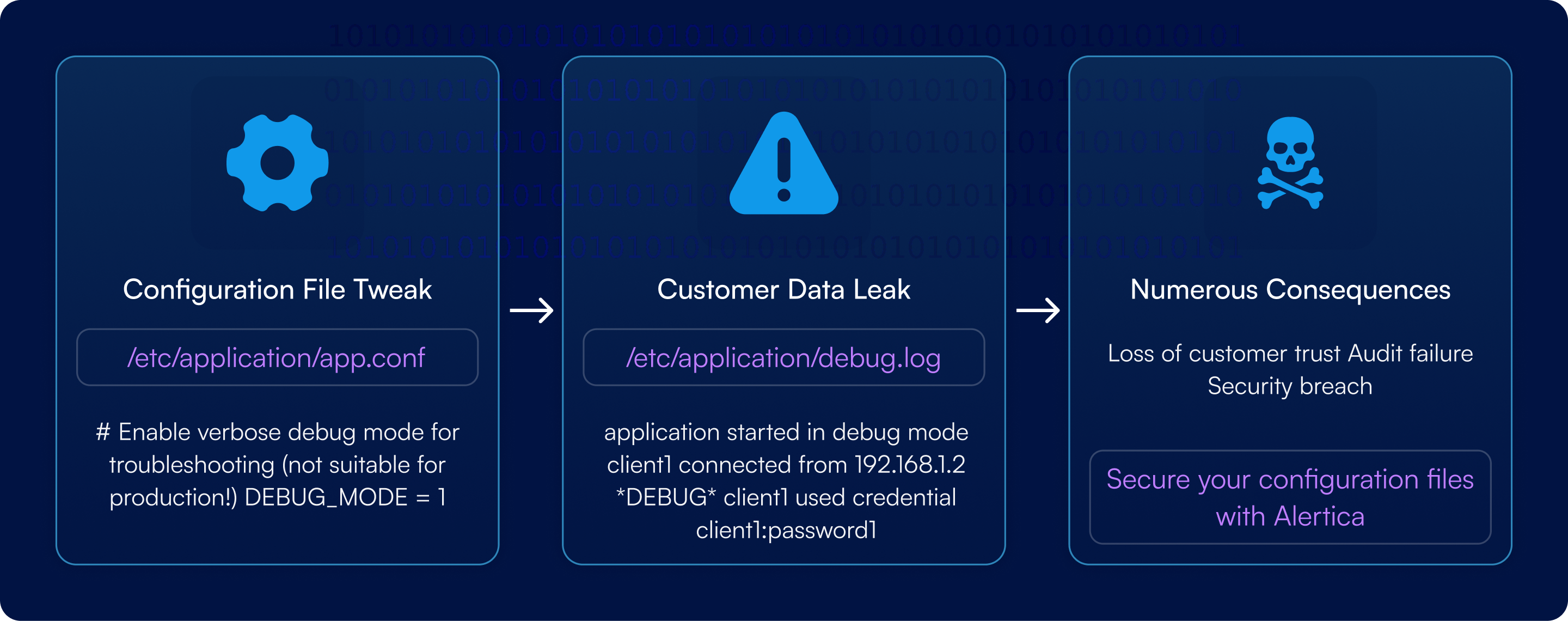
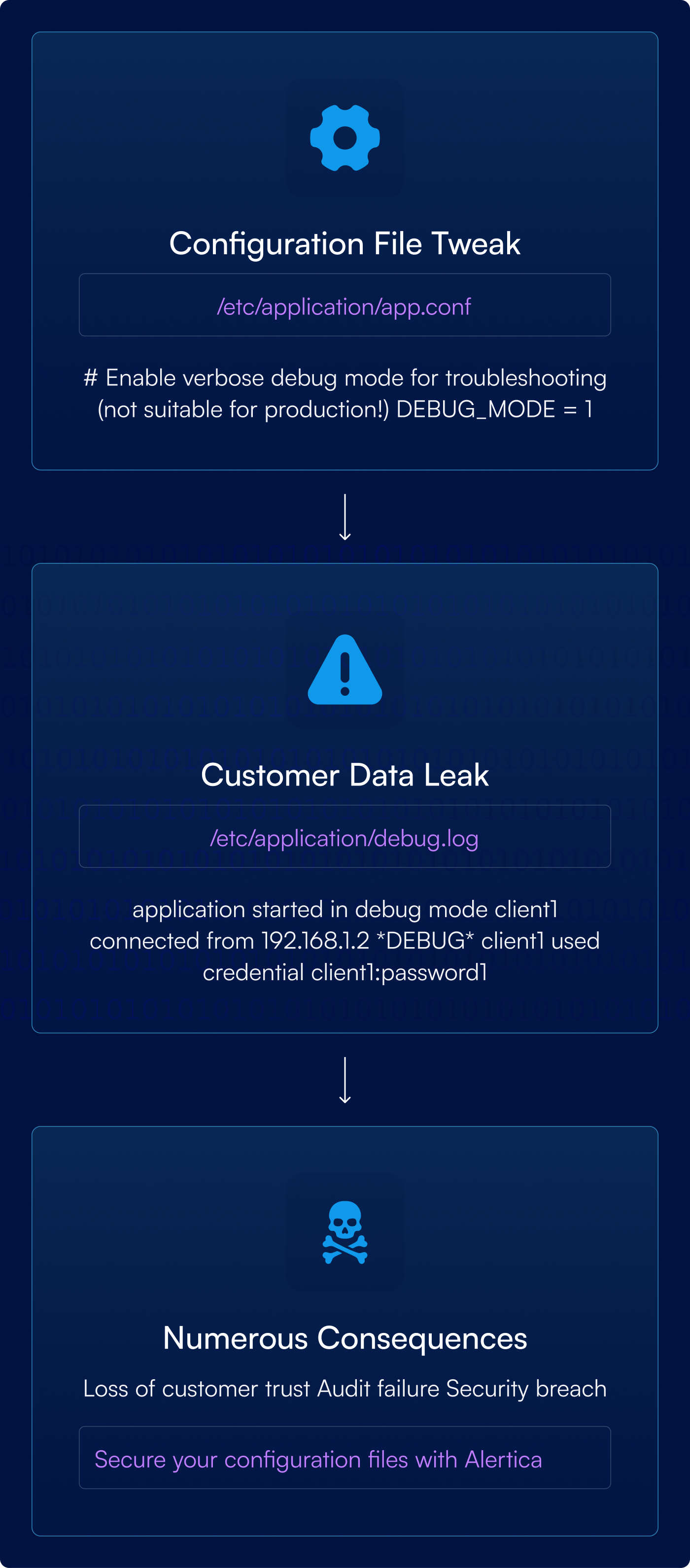

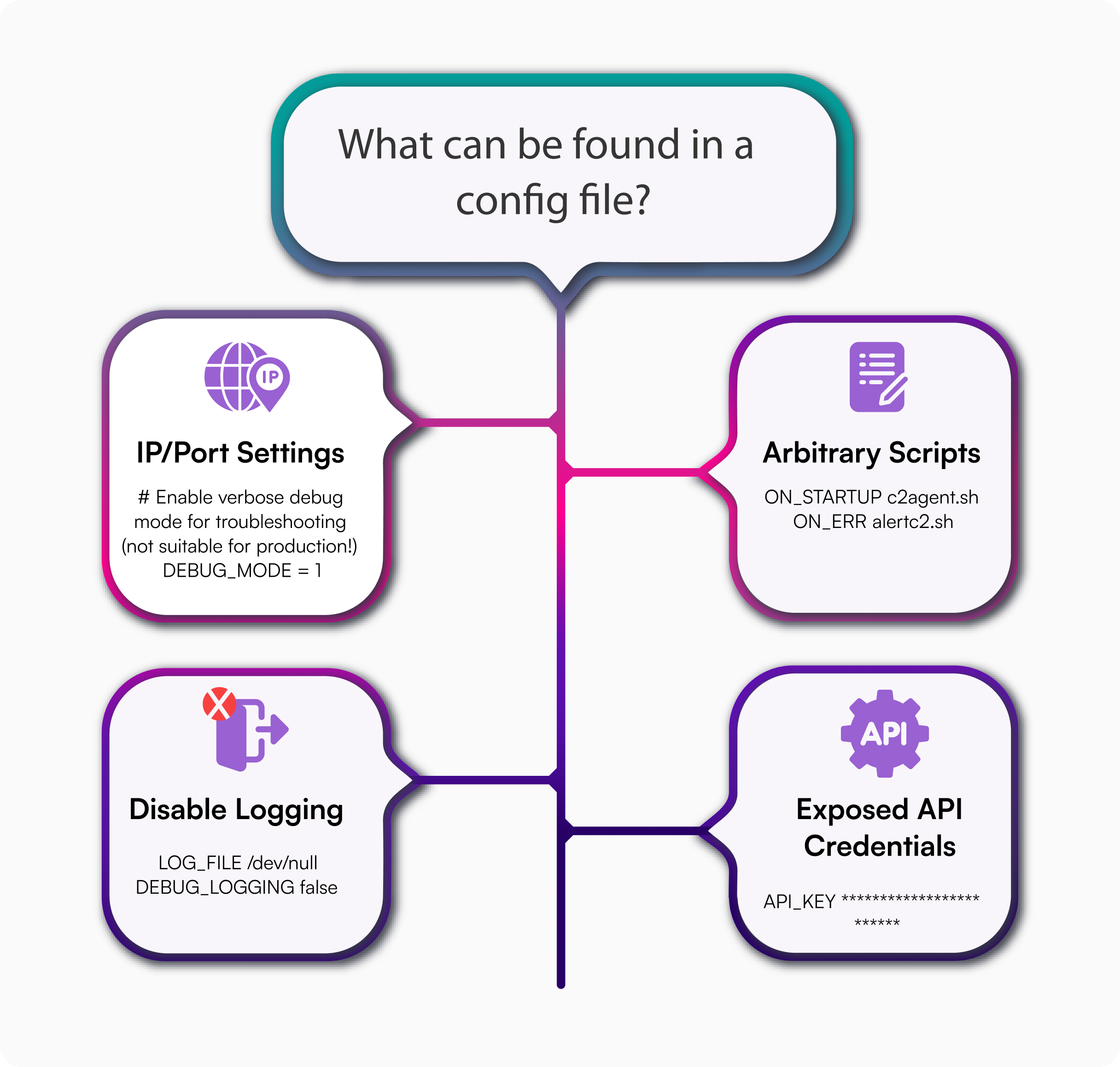
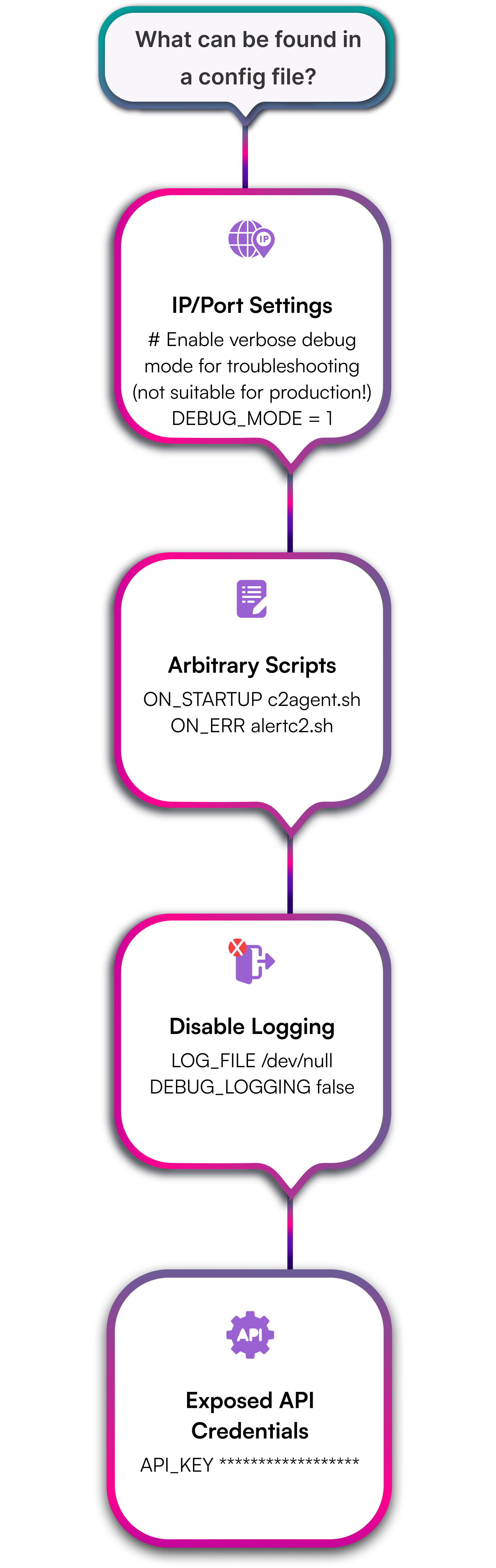
Configuration files are like control panels. They don’t contain the application itself, but they determine how it behaves. These files often offer far more control than a typical settings page, exposing deep, granular options that were originally designed to support customization and flexibility. But with that flexibility comes risk. The same configuration knobs that make applications adaptable can also be exploited by attackers. A well-placed change, even a single line, can quietly disable logging, expose private data, or weaken authentication.
Some common examples include:
Imagine an attacker gains access to a shared environment running an email server — whether through stolen credentials, insecure remote access, or a compromised user account. Without needing malware or advanced exploits, the attacker changes just a few lines in the server’s configuration file.
From there, they might:
These kinds of changes are subtle, and because configuration files are rarely monitored after deployment, they often go unnoticed for days or weeks.
Adversaries actively look for overlooked, static configuration files - the ones that miss routine audits and are considered "set-and-forget." Rather than causing damage immediately, many attackers prefer to remain hidden. They use configuration changes to maintain persistence, weaken defenses, and quietly prepare for a larger impact.
By the time symptoms appear, the root cause may be buried in a long-forgotten change to a config file.
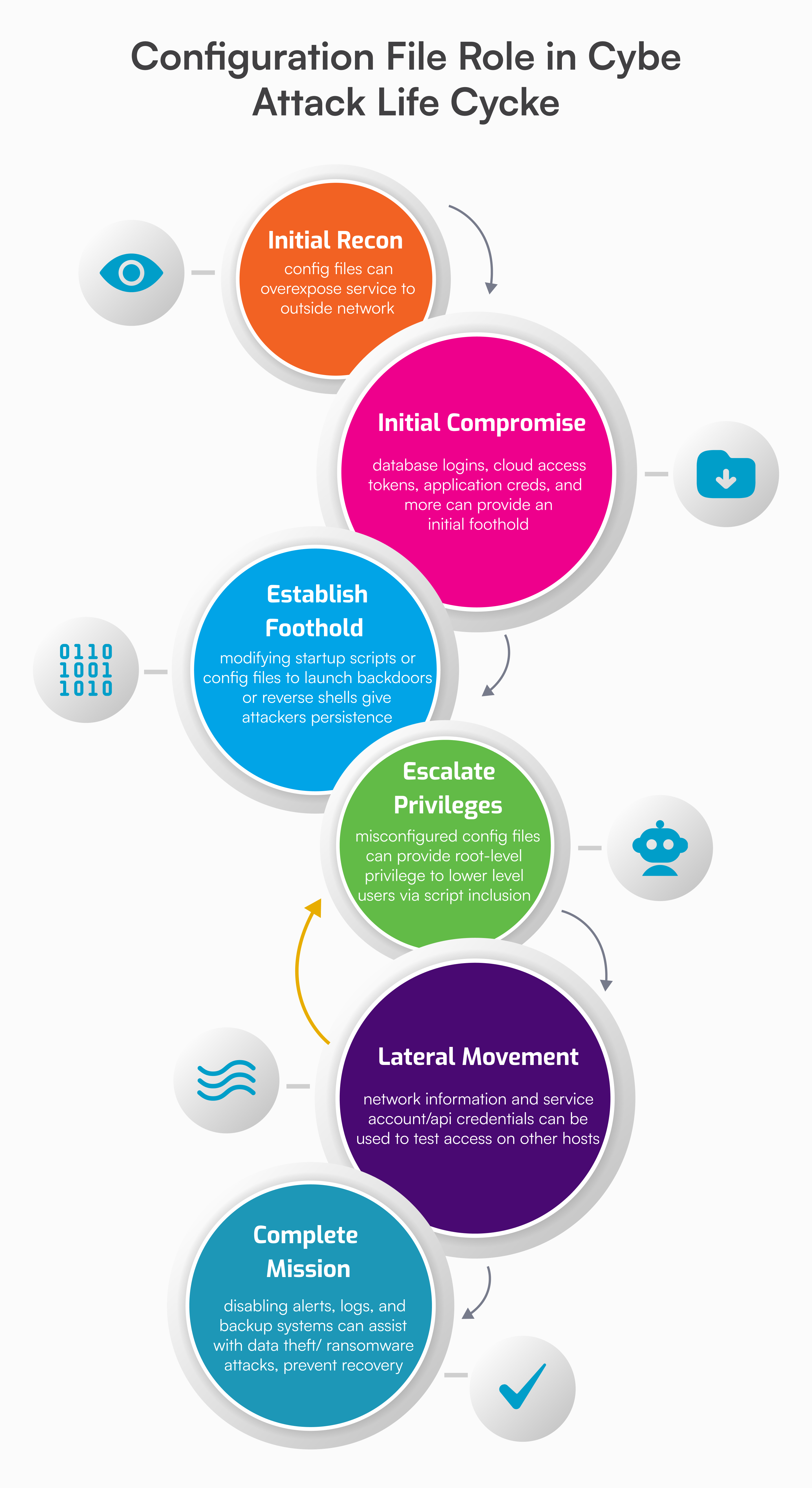
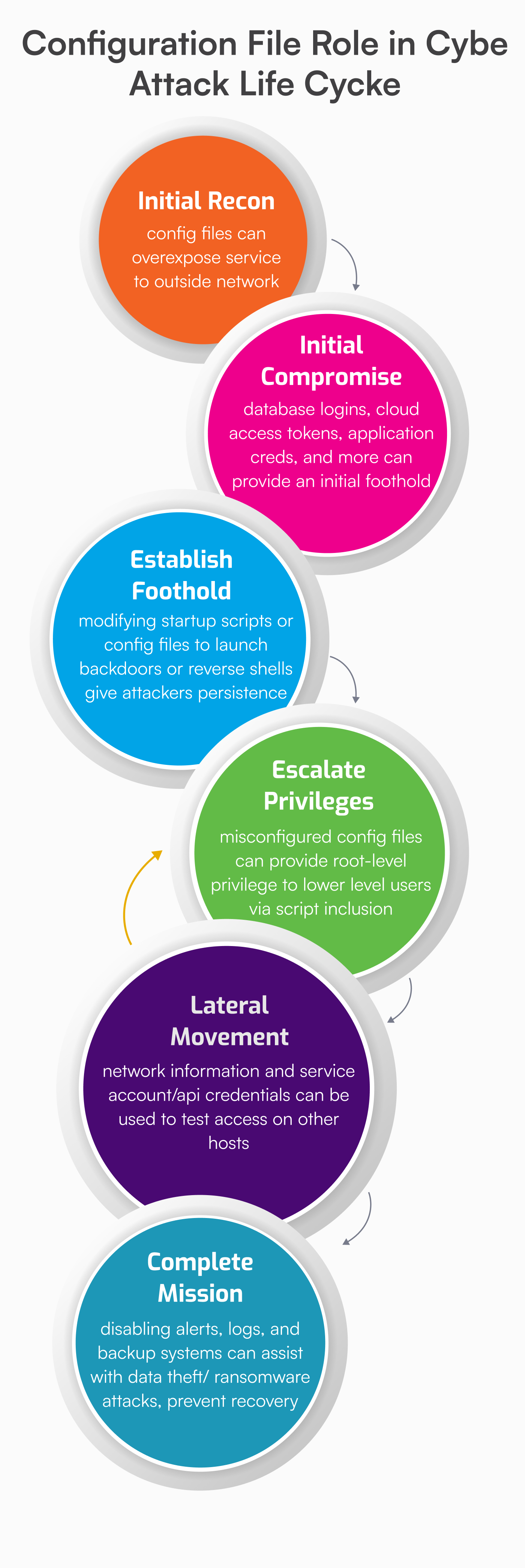
In many organizations, configuration files are deployed once and then quietly forgotten.Changes happen ad hoc - sometimes with rigorous documentation, but often without it. Onone end of the spectrum, you might have a tightly controlled enterprise change managementsystem. On the other, an overworked sysadmin making a 1 a.m. fix to keep a legacy app running.
Tools like Git help track code, but they rarely cover the full stack. Critical configuration directories like `/etc/`, `C:\Windows\System32`, or `ProgramData\MyApp` are often excluded - whether for convenience, complexity, or fear of breaking something. These are exactly the kinds of blind spots attackers count on.
So how can we secure and monitor these areas - especially in environments where agents can’t be installed or version control isn’t practical?
What if we could monitor sensitive configuration files without touching the systems at all? Imagine: no installs, no agents, no disruption.
Alertica remotely inspects systems for misplaced or suspiciously modified configuration fileswithout needing to install anything locally. That means faster setup, minimal systemimpact, and easy scalability across environments, from cloud infrastructure to on-premises servers.
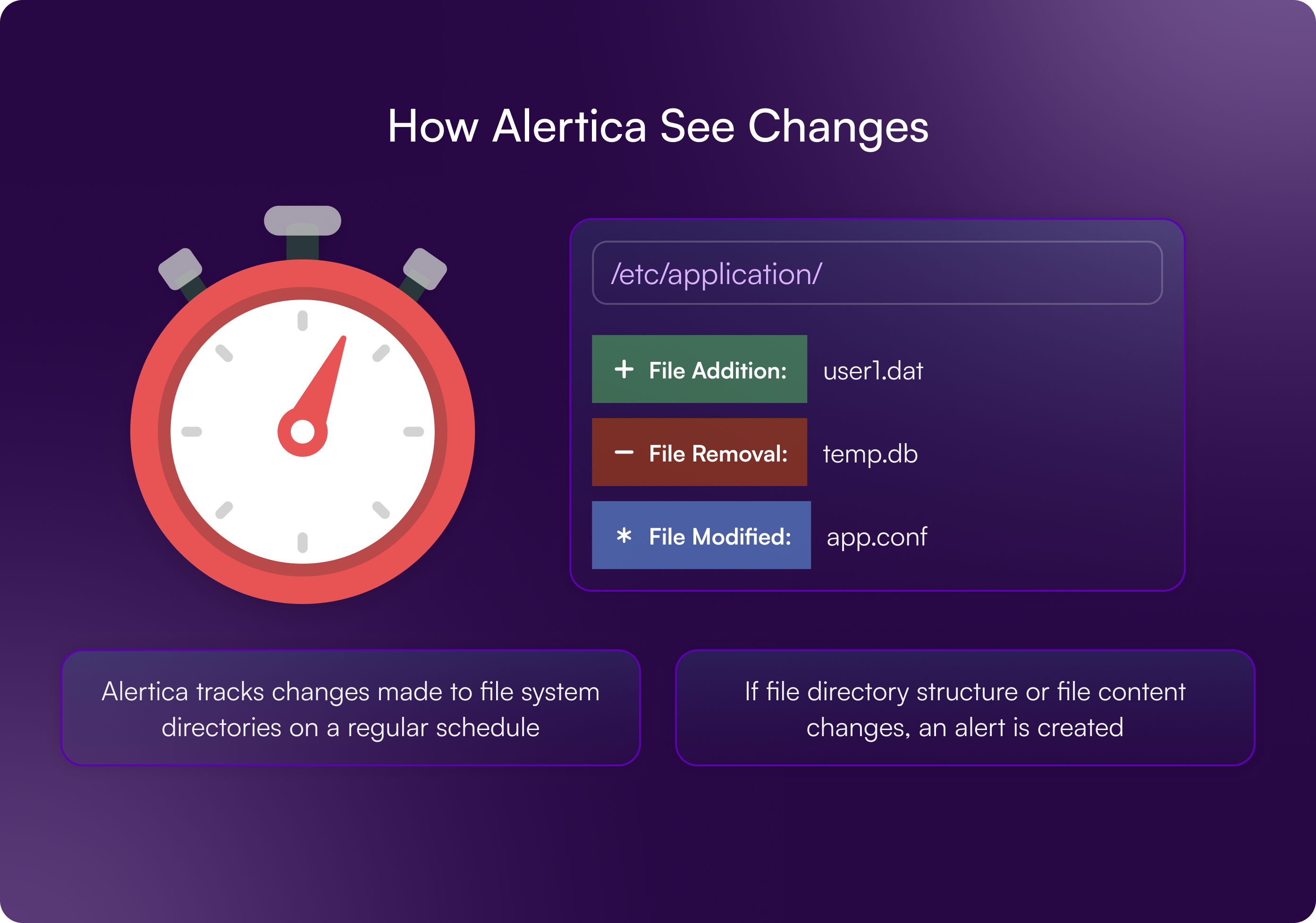
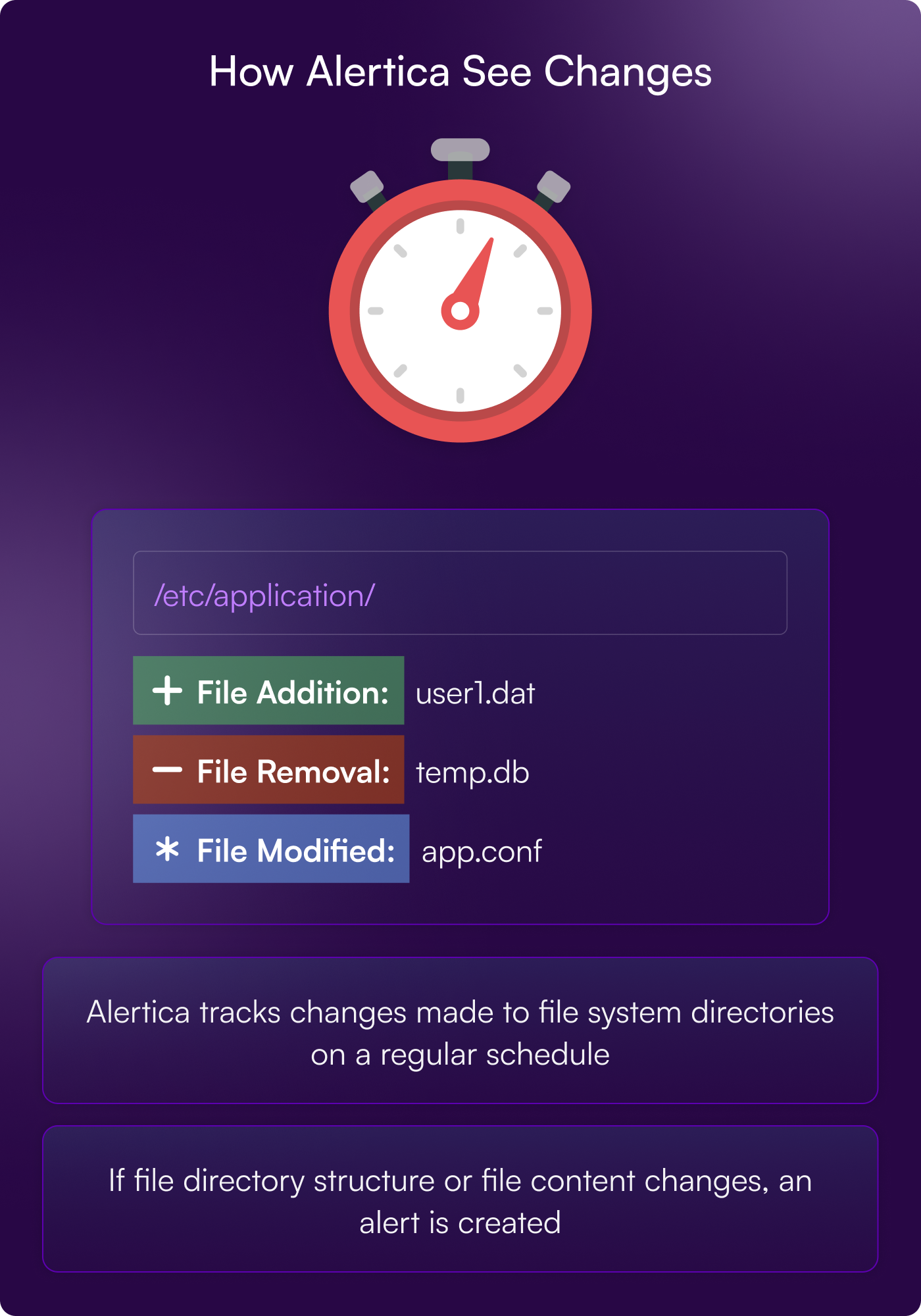
Instead of relying on intrusive agents or full content access, Alertica builds a fingerprint of known-good configuration files based on metadata like filename, path, and last modified time. If a new file appears, an old file disappears, or something changes unexpectedly, Alertica flags it, often before traditional tools would even notice. This metadata based approach also preserves privacy - We don’t need to know what your exact configuration is to understand the importance of keeping it secure.
By monitoring file structure and timestamps, Alertica helps teams detect tampering faster and respond sooner. Even when the identity of the user making the change isn’t available, Alertica can highlight when the change happened - and whether it fell outside expected
patterns, such as time of day or day of the week.
By monitoring file structure and timestamps, Alertica helps teams detect tampering faster and respond sooner. Even when the identity of the user making the change isn’t available, Alertica can highlight when the change happened - and whether it fell outside expected
patterns, such as time of day or day of the week.
This makes Alertica especially valuable in environments that are difficult to monitor with modern DevOps tools: like legacy systems, unmanaged VPS deployments, or file servers running critical internal applications.
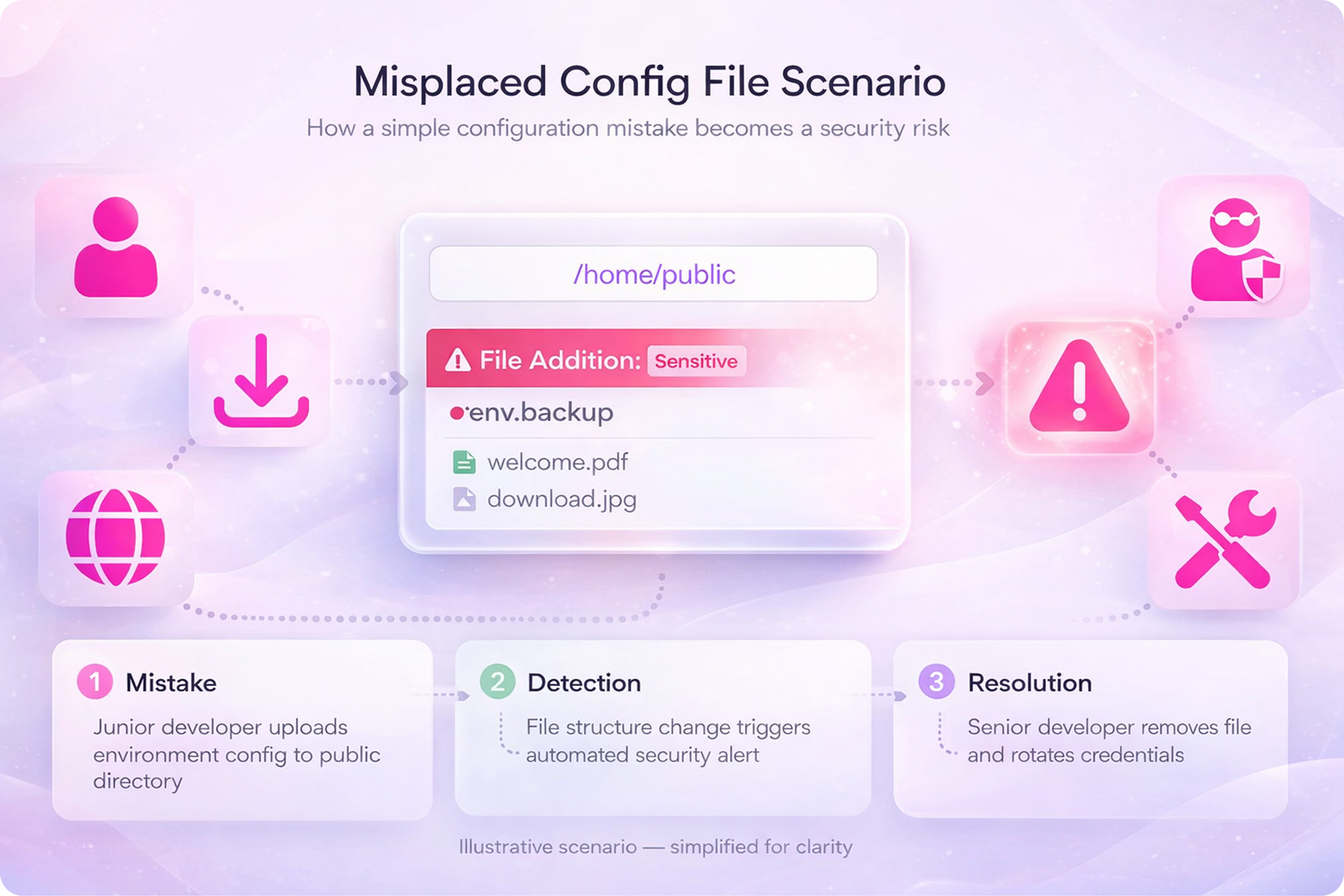
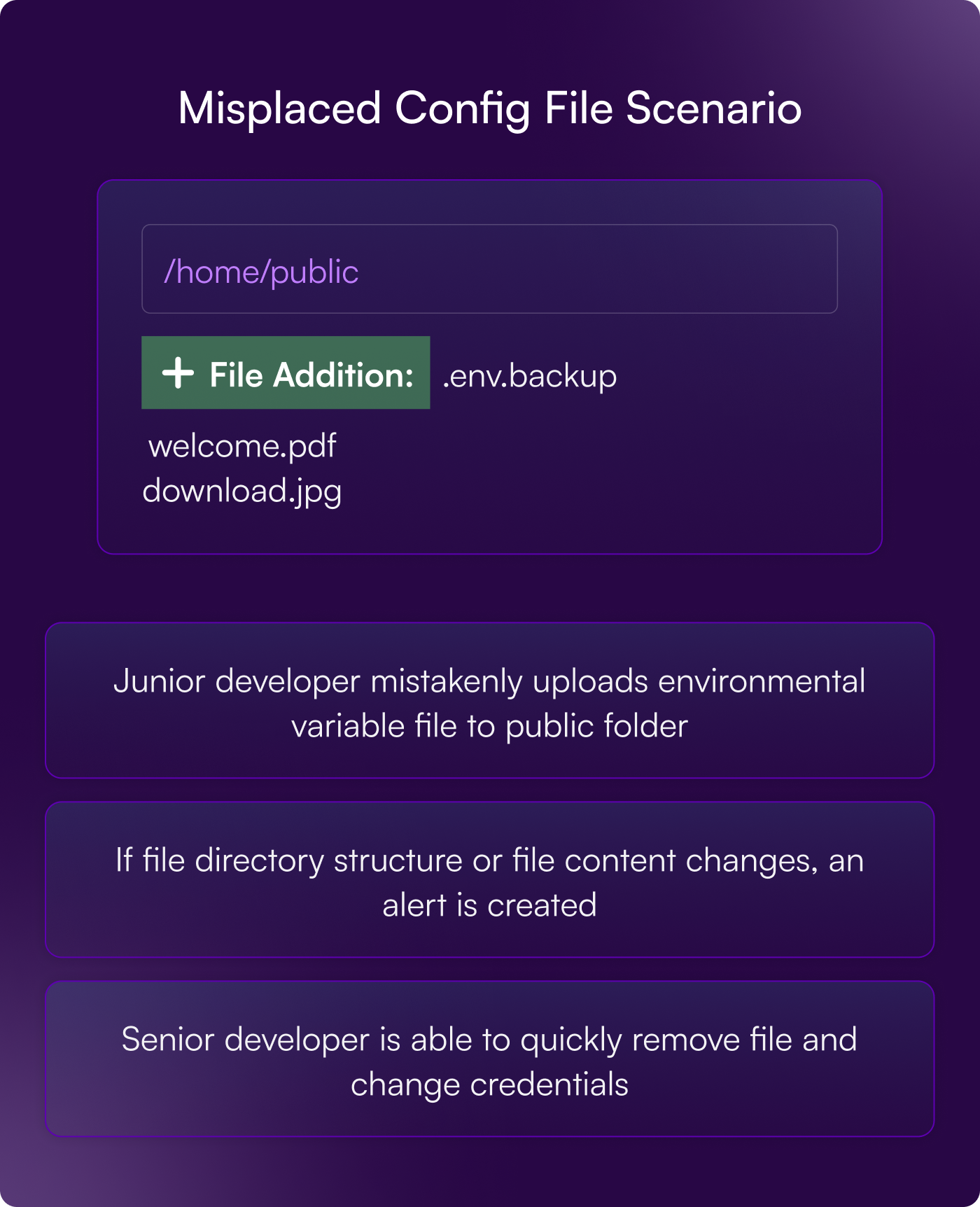
During a routine deployment, a junior developer accidentally uploads a file named `.env.backup`` to a public-facing directory on the production server. The file was meant for internal reference, but it ends up sitting in a location that is visible to anyone who knows where to look.
Inside the file are SMTP credentials used for automated notifications, along with an unused API key from earlier testing. These credentials were never meant to leave the internal environment and were not encrypted. Because the file is outside version control and not part of any deployment checklist, no one notices the mistake.
This is the kind of scenario that slips through the cracks. It involves no malware, no vulnerability exploitation, and no obvious warning signs—just a simple human error that can create a serious security exposure.
What Alertica Does
What Alertica Does
This kind of fast detection allows teams to catch silent mistakes before they become public breaches. With Alertica in place, even small oversights like this can be turned into quick recoveries instead of long-term compromises.
In many environments, installing agents on every server is either impractical or outright prohibited. Some teams work with legacy infrastructure that cannot support modern monitoring tools. Others operate under strict change control policies, where even small system modifications require formal approval.
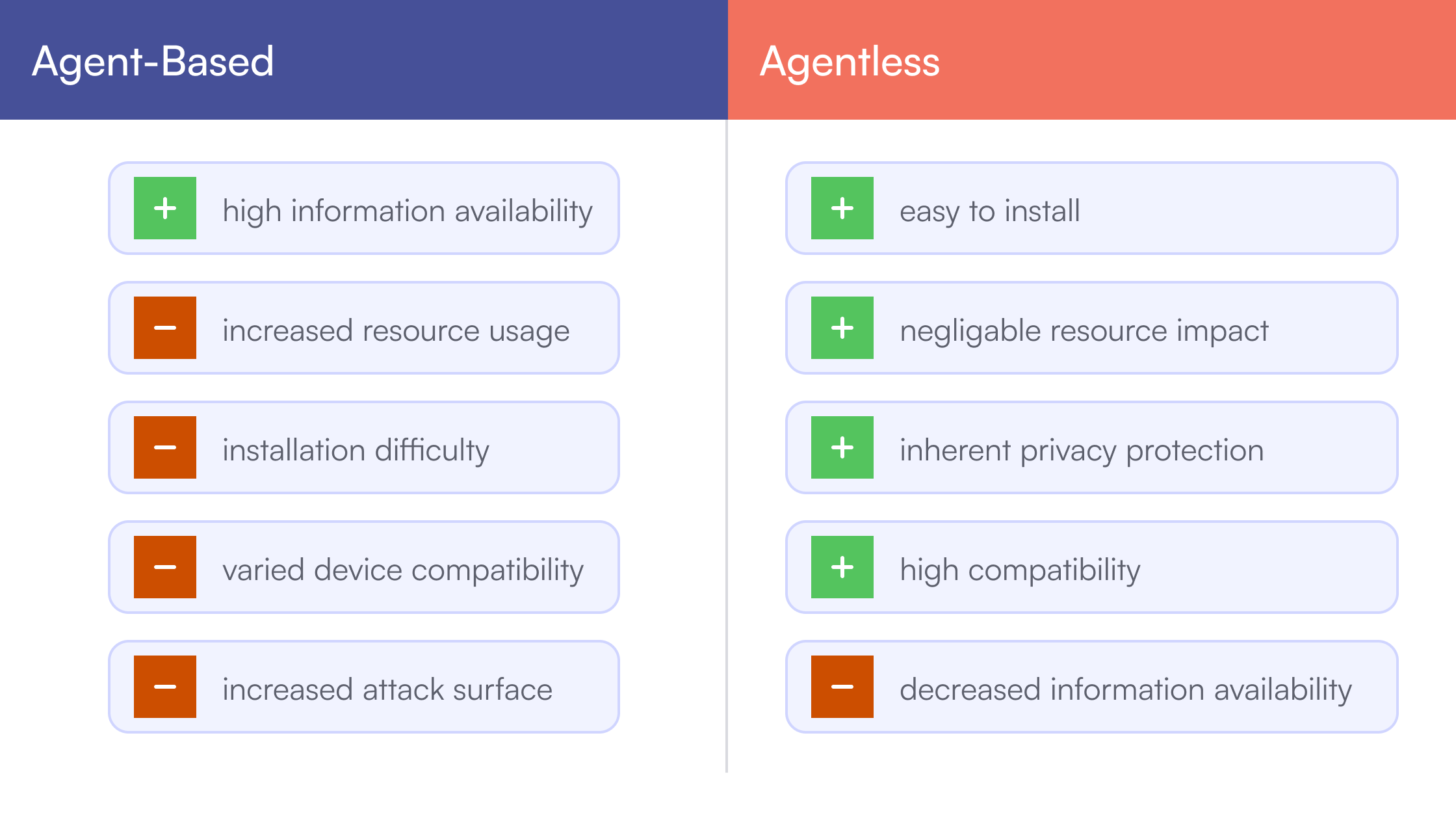
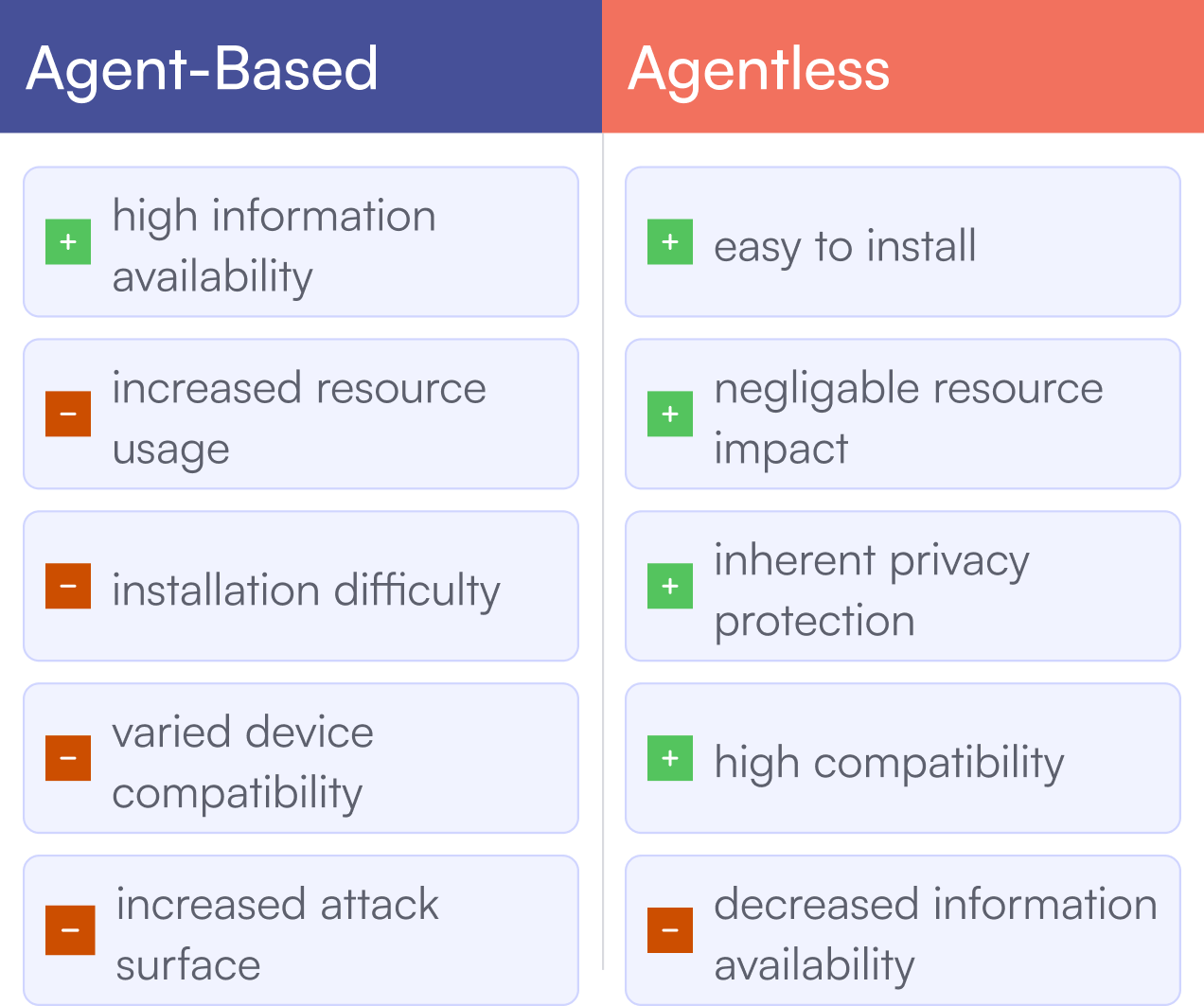
Alertica solves this by using lightweight, read-only protocols to scan for configuration changes. It does not require software installation, elevated privileges, or persistent background processes. This makes it well suited for both modern cloud infrastructure and
older, unmanaged systems that still play a critical role.
Because Alertica works without agents, it can be deployed quickly, scaled easily, and monitored centrally. It introduces no new attack surface, no update burden, and no additional resource usage on production machines.
Overlooking configuration files in your security strategy means leaving one of the most powerful tools in an attacker’s arsenal unmonitored. These files control how systems behave, how data flows, and how services interact - and yet, they’re often changed quietly and rarely reviewed.
With lightweight, agentless monitoring, it’s possible to close this gap without disrupting existing workflows or increasing system complexity. Alertica provides a fast, privacy conscious way to surface the changes that matter, even in environments where other tools
fall short.
If you want to see how Alertica works in your environment, we invite you to test it for yourself or book a consultation with our team.
Get a personalized tour of Alertica from one of our team members and learn how it can fit your infrastructure.
Request a Demo
Alertica is a cloud-based server monitoring platform that provides real-time file activity alerts to help teams detect suspicious behavior early—without the need for installation or complex setup.